Ash burial in Latvia: options, prices, and regulations
In recent years, cremation has become an increasingly popular choice in Latvia. It is a conscious decision that allows families to say goodbye with dignity and in an environmentally responsible way.
However, relatives often have many questions: how to properly arrange the burial of ashes, what regulations for the burial of ashes exist in Latvia, and what documents are required?
In this article, the ANGEL funeral home will explain in detail all legal aspects, available options, and practical steps. We will help you understand Latvian legislation, explain the cost of a place in a columbarium or cemetery, and provide guidance on how to choose cremation urns in Riga.
Our goal is to give you peace of mind and confidence that everything will be taken care of by experienced professionals.
What does Latvian law say about the handling of ashes?
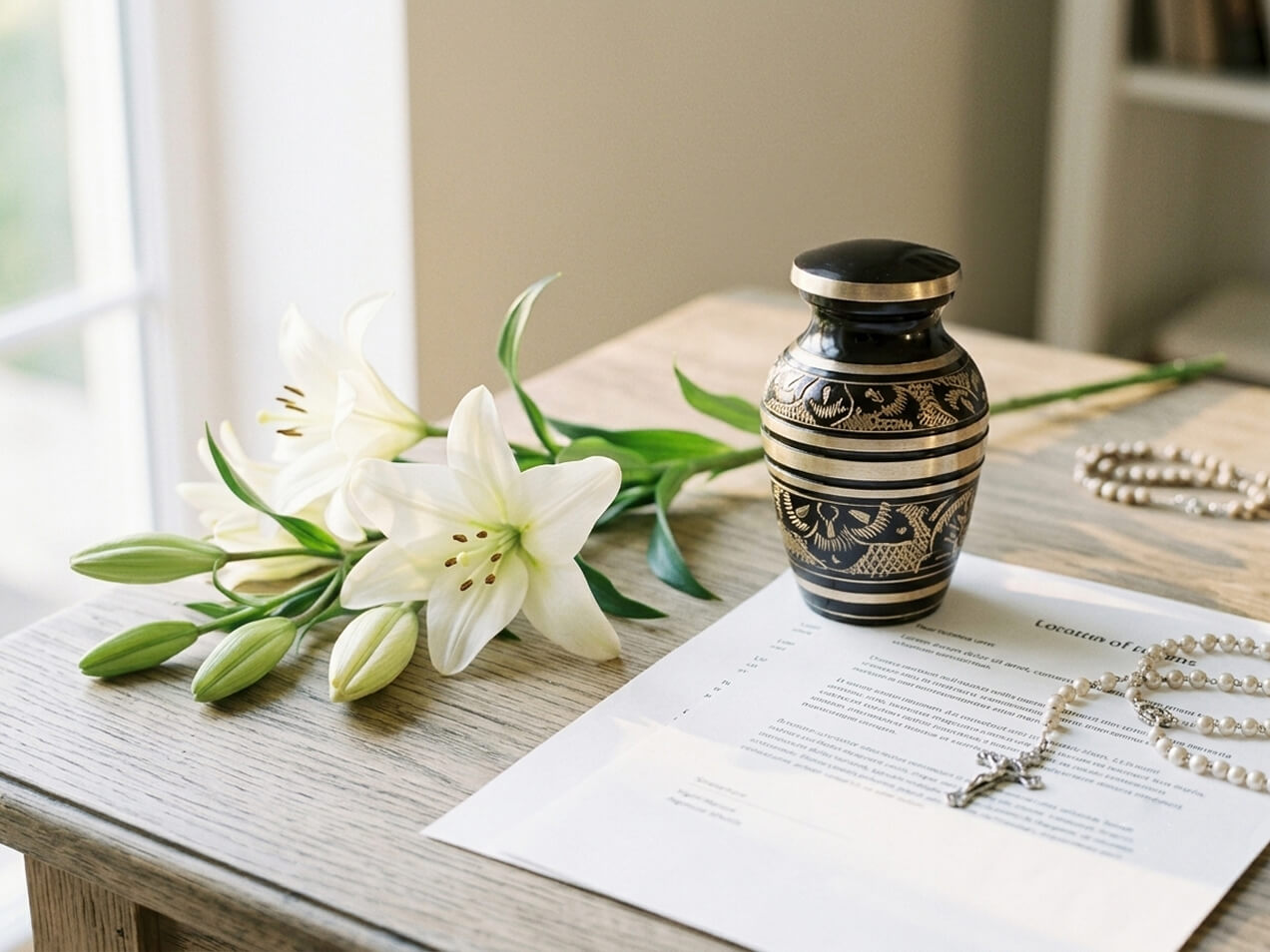
Latvian legislation regulates the field of funeral services quite clearly, while still allowing families a certain degree of freedom of choice. After cremation in Latvia is completed, the certified crematorium provides the relatives with a capsule or urn containing the ashes. Along with it, an official cremation certificate is issued, which serves as a legal document.
The urn may be collected by the person who has signed the crematorium service agreement or by their authorized representative. Latvian law does not impose strict or immediate time limits requiring the ashes to be buried on the same day. You have the right to take time to carefully consider the next steps, gather family members, and arrange a meaningful farewell ceremony.
Is it possible to keep an urn with ashes at home?
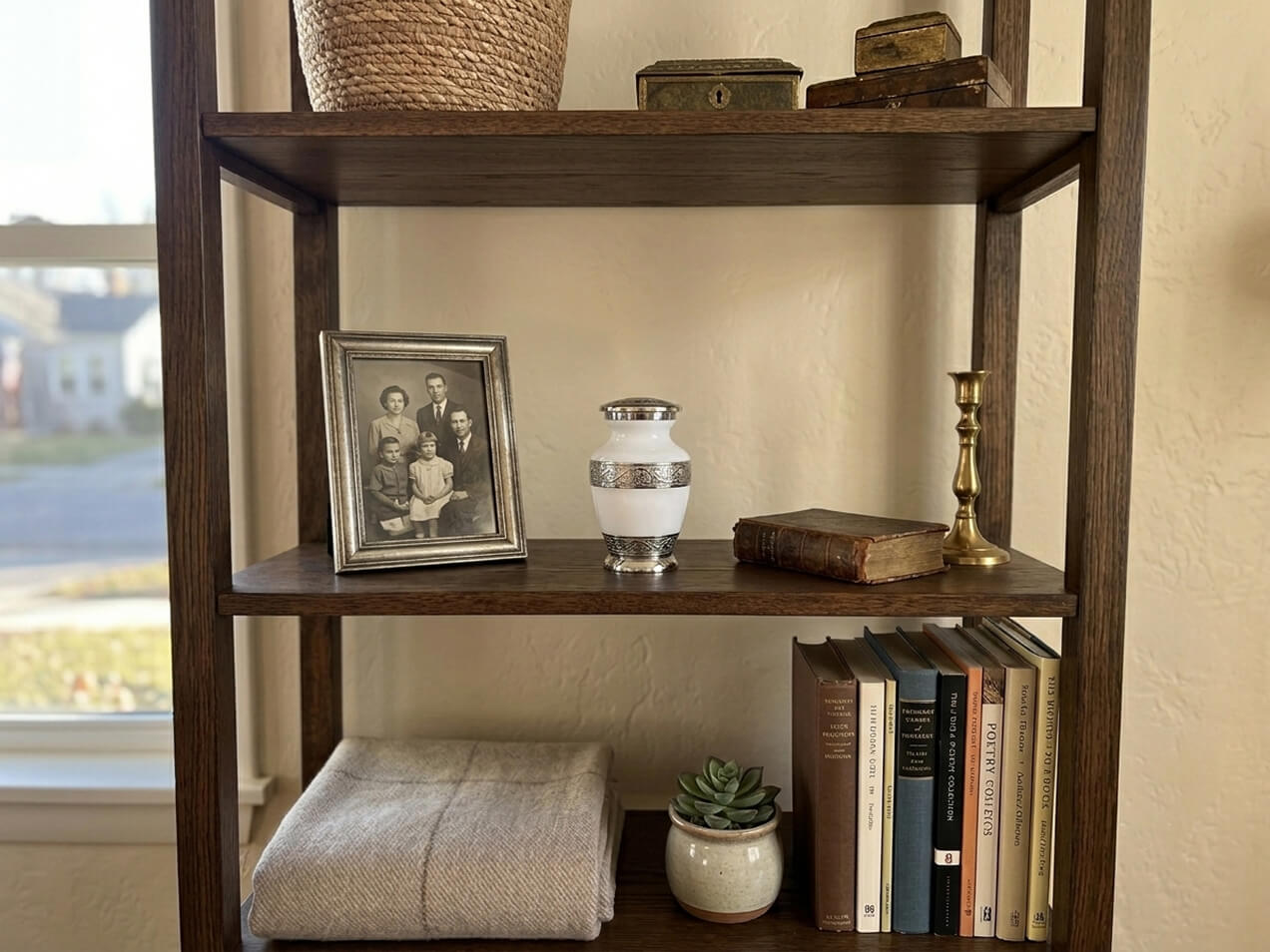
One of the most common questions that ANGEL specialists receive is whether it is permitted to keep an urn with ashes at home. From a legal perspective, Latvia does not impose fines or a strict prohibition on temporarily keeping an urn in a private residence. Many families choose this option, for example, to wait for relatives arriving from abroad or to prepare a memorial ceremony.
At the same time, Latvian traditions encourage a final burial. Psychologists and representatives of various religious denominations also agree that, in order to complete the grieving process, the deceased should have a permanent place of rest.
It is believed that keeping ashes at home is not recommended, as it may make it more difficult to emotionally come to terms with the loss. However, there is no legal or regulatory prohibition against this in Latvia.
Options for the burial of ashes in Latvia
Modern funeral culture offers several dignified ways to preserve the memory of a loved one. The choice depends entirely on the wishes of the deceased, the religious beliefs of the family, and financial possibilities. Below, we will explore the three main options officially available to residents of our country.
1. Traditional burial of an urn in the ground
This option is chosen by those who want to follow family traditions and have a specific place to visit on memorial dates.
The burial of an urn in the ground in Latvia is possible both in a completely new cemetery plot and as an interment in an existing family grave. According to sanitary regulations, the required depth for an urn is significantly less than for a coffin, which makes the technical process easier.
For the burial of ashes in a family grave, there is no need to wait until the end of the sanitary period (which is 20 years for traditional burials). This means that loved ones can be united in the same memorial site at any time. To arrange the burial, it is necessary to contact the administration of the specific cemetery and provide the cremation certificate as well as the death certificate.
2. Scattering ashes: freedom and unity with nature
Many people express their wish during their lifetime that, after their passing, their ashes be scattered over places that were meaningful to them. Is scattering ashes permitted in Latvia? Latvian legislation regulates this matter in a rather specific way.
For example, the state Cremation Regulations (Kremācijas noteikumi) do not provide detailed instructions on exactly where ashes may or may not be scattered outside ritual facilities. After the urn is handed over, this responsibility falls on the family.
When it comes to official locations, the Latvian Cemetery Law (Kapsētu likums) clearly defines the rules for designated areas:
Cemeteries may establish a separate section for scattering the ashes of cremated persons, but such burials must be coordinated with the cemetery administrator.
As for areas outside cemeteries — such as forests, parks, or coastal areas — the applicable rules are not only funeral regulations but also public order requirements and sanitary regulations established by the specific municipality (whether Riga, Jurmala, or any other region).
Since public places, crowded beaches, and urban areas are subject to strict restrictions regarding any unauthorized ritual activities, choosing an appropriate location should be done with great care.
For those who wish to fulfill the final wish of the deceased and choose a symbolic return to nature, the most appropriate and respectful solution is scattering ashes away from residential areas — for example, over the waters of the Baltic Sea or the Gulf of Riga (away from beaches and at a safe distance from the shore), or in remote forest areas. This approach helps maintain public harmony while giving a loved one a sense of complete freedom and peace.
3. Columbaria in Latvia: a modern choice
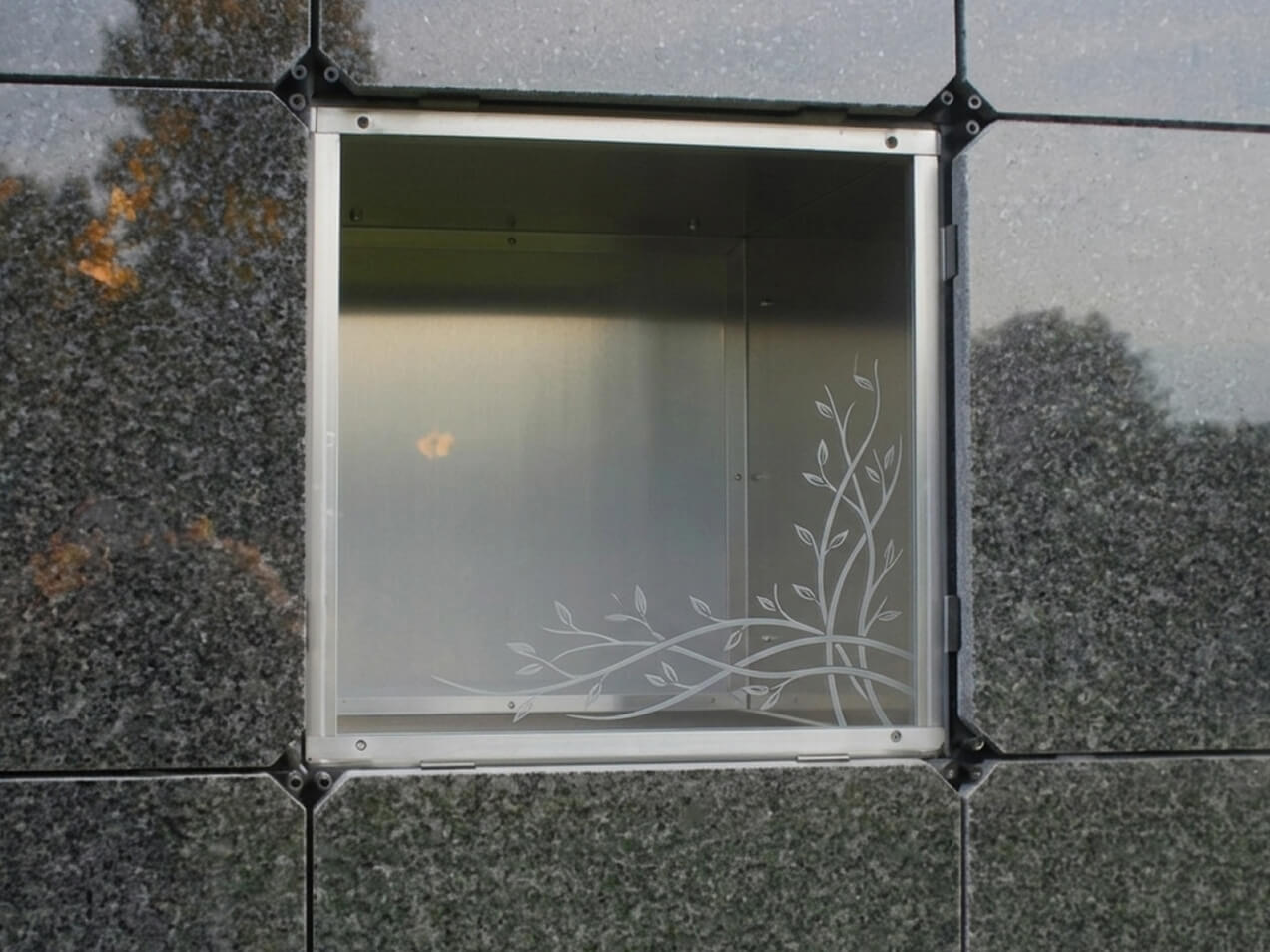
For those looking for an aesthetic and minimalist option, a place in a columbarium is an ideal choice. A columbarium is a special memorial wall with niches where an urn is placed. The niche is then sealed with a granite plaque featuring an engraving.
In Latvia, such modern complexes are available at several cemeteries, including Meža kapi (Forest Cemetery) in Riga, where, due to high demand, the city authorities regularly design and expand new sections of memorial walls.
By choosing a columbarium, the family avoids the need for regular maintenance of a burial plot, such as weeding, renewing the soil, and planting flowers. The niche always remains neat, well-maintained, and dignified. This option is especially convenient for relatives who live outside Latvia and cannot visit the cemetery frequently in person.
It is important to consider the legal aspects of this option: the cost of a columbarium niche in Riga or other cities is determined according to the official price list of the specific cemetery or municipality, and a fixed fee is charged for obtaining the right to use a niche. The person arranging the service signs an official agreement granting the right to use the niche for many years.
According to Latvian cemetery maintenance regulations, this document must specify a successor (the heir of the right to use the niche) in case of unforeseen circumstances or the death of the person responsible for it. This ensures that the memory of a loved one is legally protected and that the niche remains with your family on lawful grounds.
Documents and timeframes after cremation
To ensure that the farewell process goes smoothly without legal complications, it is important to properly prepare all necessary documents. The ANGEL funeral home takes care of all administrative procedures, protecting you from unnecessary stress. For the official burial of an urn in a cemetery or columbarium, you will need:
- death certificate (issued by the Civil Registry Office);
- certificate confirming that the cremation was carried out by a certified crematorium;
- document confirming the right to use a family burial plot (when placing the urn in a cemetery);
- application from the person responsible for the burial arrangement.
The processing time usually takes from several days to one week. The urn itself can be stored at the crematorium free of charge or for a small fee for the period specified in the agreement (usually up to 30–45 days). This gives the family enough time to calmly plan the farewell ceremony.
How much does ash burial cost: prices in Latvia?
The total budget consists of the cost of the cremation itself, the choice of urn, cemetery services, or the rental of a columbarium niche. On average, the cost of urn burial in Latvia is more affordable than arranging a traditional funeral with a coffin. This is due to lower expenses for grave preparation, transportation, and further maintenance of the burial site.
What does the total cost consist of?
When it comes to costs, the approximate total price for cremation followed by burial of the urn in the ground in Latvia starts from €650 (depending on the chosen funeral service provider, whether a farewell ceremony in a hall is included, and the cost of the urn).
This usually includes:
- Cremation and document processing: this is the basic procedure (additional expenses may apply, such as a cremation coffin, document preparation, and other related services).
- Urn: simple urns are more affordable, while decorative options (wood, ceramic, metal) are more expensive.
- Cemetery services (burial in the ground): preparing a small grave for an urn is significantly less expensive than a standard burial plot.
Alternative: purchasing a columbarium niche
If you choose a memorial wall, the cost of a columbarium niche in Riga depends on the conditions of the specific cemetery. This cost usually includes long-term rental of the niche and installation of a memorial plaque.
You can view the official municipal service price list, find out the exact current fee for a columbarium niche in Riga (currently €720 for 20 years with the right to place up to 4 urns), and review the current regulations on the official website of the Riga City Council in the section “Apbedīšana Rīgas kapsētās” (Burial services in Riga cemeteries).
For an accurate budget calculation, you can always contact ANGEL consultants, who will prepare a transparent cost estimate without any hidden fees.
Dignified urns for ashes from ANGEL funeral home
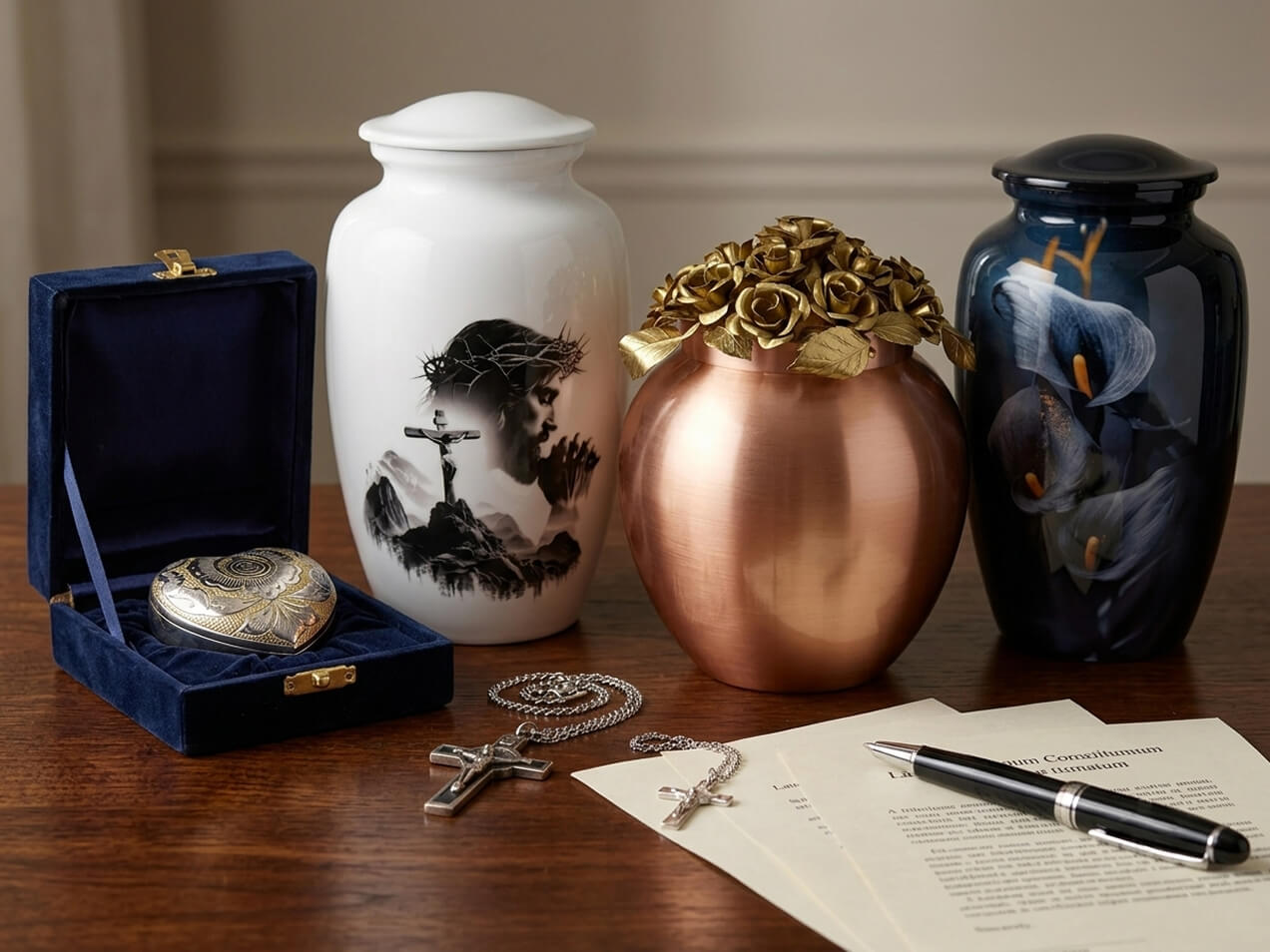
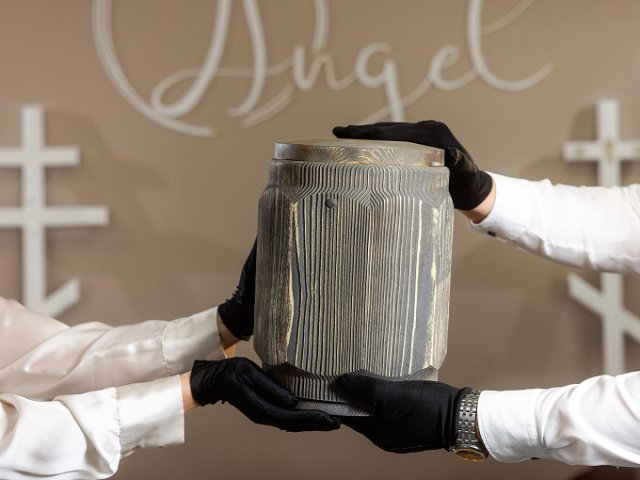
Choosing an urn is a deeply personal process that reflects the character and individuality of the person who has passed away. ANGEL funeral home offers a wide range of funeral products in Riga and Jūrmala. We understand that different burial options require different materials, and we are ready to offer the best solution.
Our catalogue includes:
- Classic metal and stone urns – durable, long-lasting, and ideal for placement in enclosed columbarium niches.
- Wooden urns made from noble types of wood – a warm, traditional design that is popular for burial in family graves.
- Artistic ceramics – exclusive handcrafted pieces designed to create a unique memorial.
- Biodegradable eco-friendly urns – made from pressed peat, cellulose, or organic materials. They naturally decompose in the soil over several years, gently returning the ashes to nature, making them an ideal choice for green burials.
Practical steps: how to organize the process?
If you have decided to proceed with cremation and subsequent burial of the ashes, the process follows these steps:
- First, contact ANGEL funeral home. Our specialists will arrange transportation of the deceased, coordinate the cremation time, and help promptly process state funeral benefits from VSAA.
- Then, together we will choose the ideal urn and decide on the final resting place — whether it is a family grave, a columbarium niche, or a respectful scattering of ashes.
- We will organize a civil or religious memorial ceremony, invite a funeral ceremony officiant, and take care of the musical accompaniment.
Every stage will be carried out with the highest level of respect and care.
Choosing cremation followed by the burial of ashes in Latvia is a modern, cultural, and dignified way to say farewell to a loved one. By understanding the rules and procedures for the burial of ashes in Latvia, you can avoid legal mistakes and unnecessary worries. Remember that you do not have to go through this difficult journey alone.
ANGEL funeral home is always by your side, ready to offer support during the most difficult moments.
We take care of all practical, legal, and organizational matters in Riga, Jūrmala, and throughout Latvia. Entrust us with the formalities so that you can dedicate this time to a sincere farewell and preserving the bright memory of your loved one.