Funeral traditions in different religions of Latvia: differences and rituals
Loss of a loved one always brings deep grief, and during this difficult period the family has to resolve many organizational issues. Latvia is a multi-confessional country where cultural and religious traditions of different Christian denominations intertwine. Each church has its own strict canons, requirements for attributes, place of farewell, and burial method.
Funeral bureau ANGEL treats the religious feelings of every family with deep respect. The purpose of this article is to examine in detail funeral traditions in Latvia for seven key confessions:
- Catholic funerals: traditions and canons
- Lutheran funerals: restraint and live music
- Orthodox funerals: strict canon and funeral service
- Old believer funerals: ancient traditions
- Baptist funerals: community and focus on the word
- Muslim funerals: sharia law and strict burial
- Jewish funerals: traditions of the jewish rite
We will explain what the main differences are, which funeral items are required, and how to observe all church rules and traditions.
1. Catholic funerals: traditions and canons
The Roman Catholic Church has deep historical roots in Latvia, especially in the Latgale region. Catholic funeral traditions are filled with hope for resurrection and the cleansing of the soul from earthly sins.
Where does the farewell ceremony take place and who leads the process?
The funeral ceremony is always led by a Catholic priest (a priest, ksiondz). The farewell can be organized in several locations:
- in a catholic church
- in a funeral hall
- in a chapel
- at the burial site
Features of the funeral service
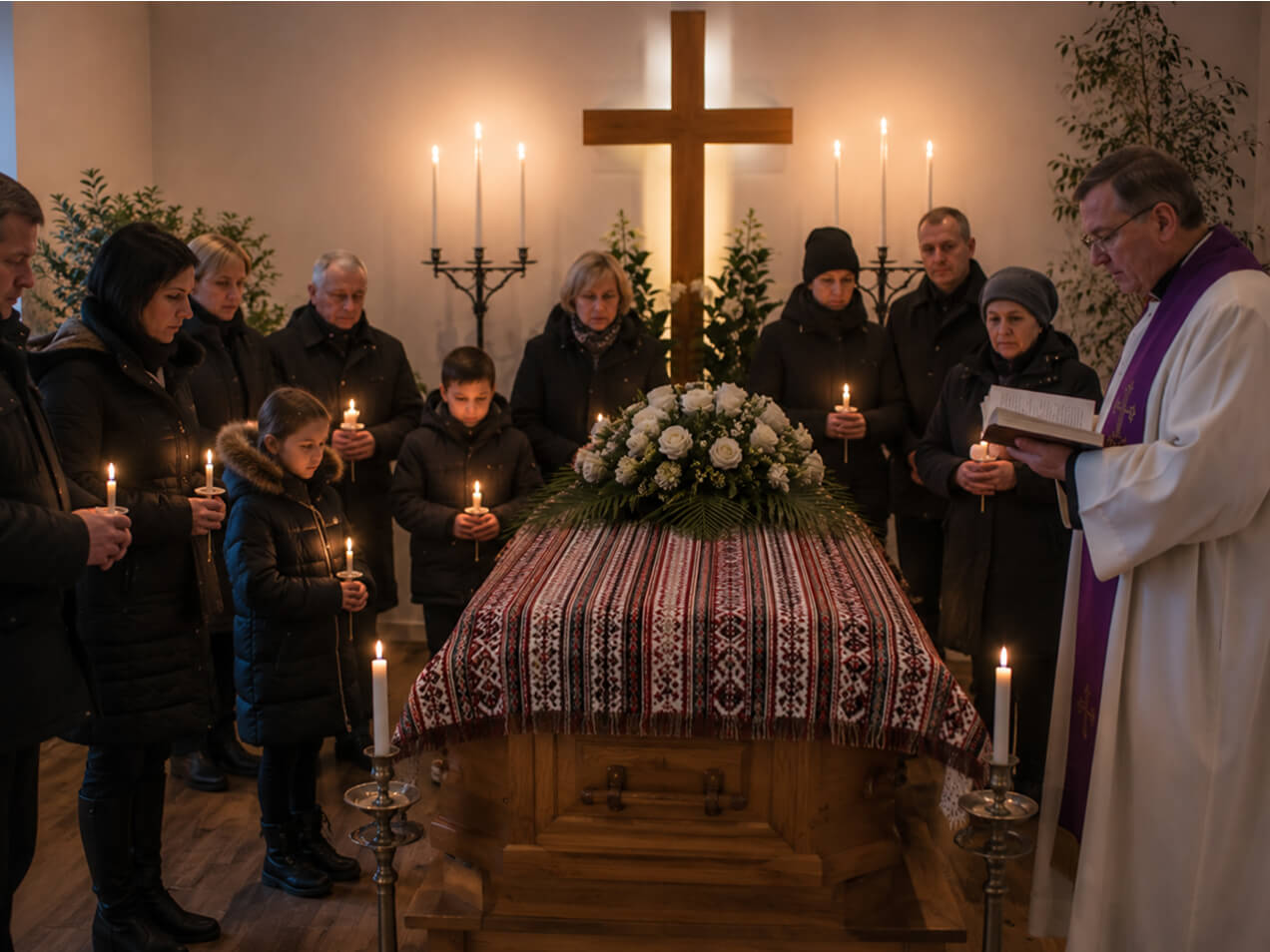
The central part of Catholic funerals is the Holy Mass, also known as the Requiem. This is a special prayer for the repose of the deceased’s soul, during which the priest and parishioners ask God to forgive the sins of the departed.
The service is accompanied by organ music and the lighting of candles, symbolizing eternal light. At the exit from the church or hall, the eldest family member traditionally thanks all those present for their support.
Preparation of the body, dressing, and transportation
The day of the funeral. The Catholic Church allows the family of the deceased to choose any day that is convenient for them, so that as many relatives and close friends as possible can gather for the farewell ceremony. Posthumous makeup is not encouraged in Catholicism: a person should appear before God in a natural state, as part of the funeral farewell ceremony.
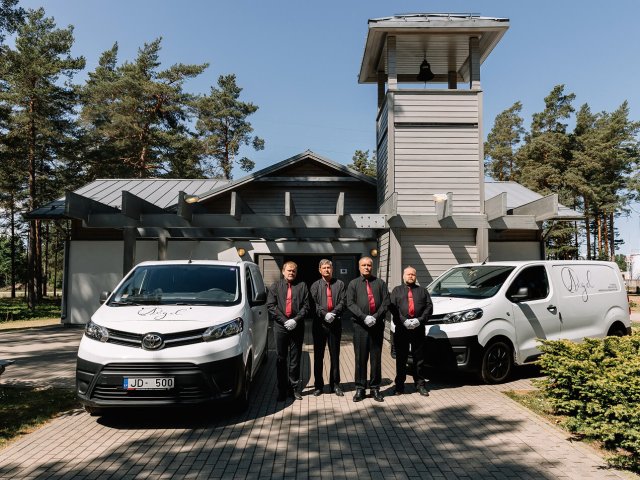
Usually, all preparatory procedures, including washing, dressing, and transportation services, are handled by the funeral home. ANGEL organizes the entire process, providing an equipped hearse for transporting the coffin to the farewell ceremony.
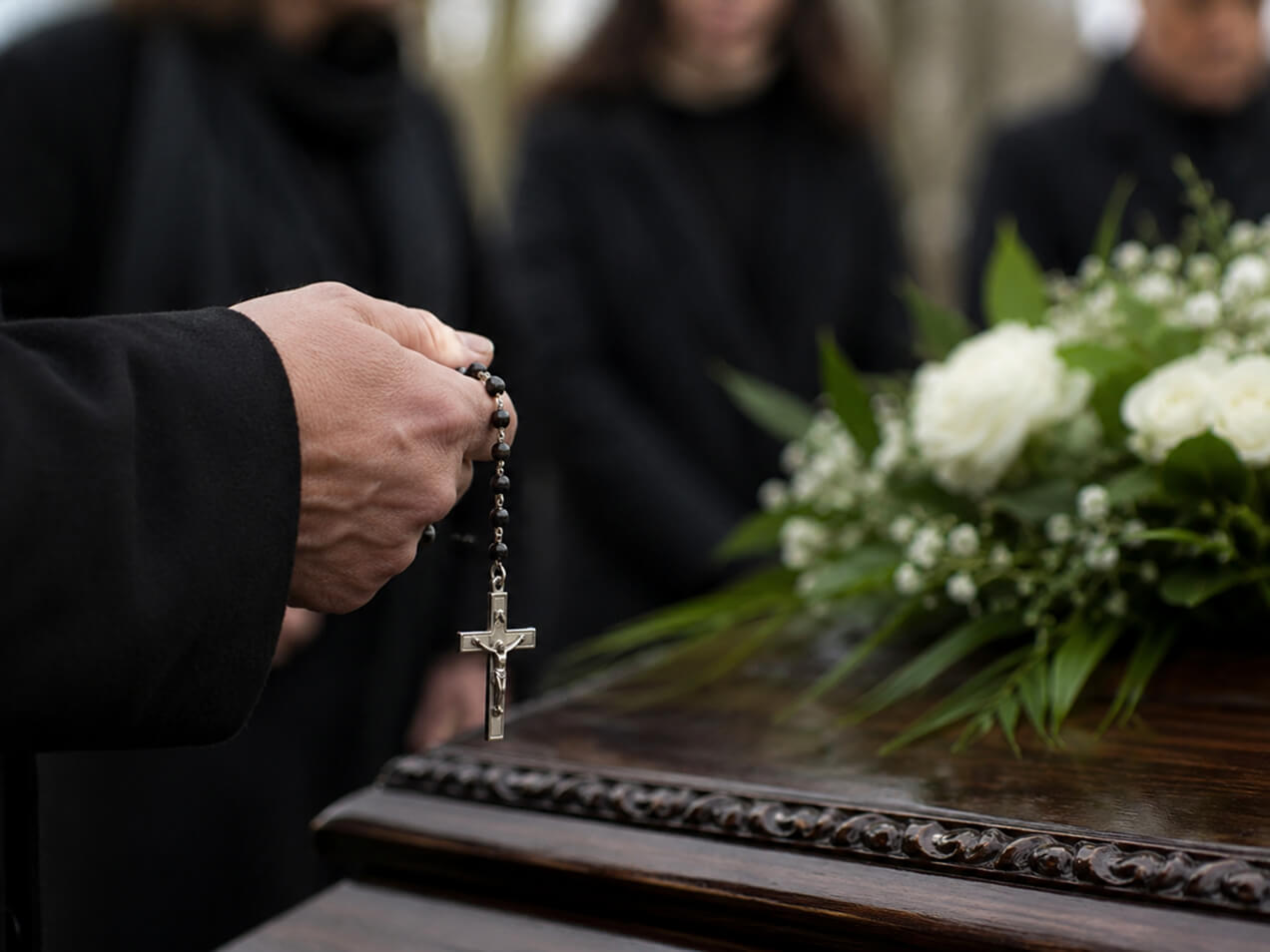
Unlike Orthodox traditions, a shroud is not used when placing the deceased in the coffin: the hands of the deceased are folded on the chest, with a rosary placed in the palms. The clothing of the deceased is chosen in modest, usually black tones, while trouser suits are also acceptable for women.
Necessary funeral attributes
For Catholic funerals, the funeral home ANGEL helps prepare a special set of funeral accessories:
- Traditional wooden coffin and four-point wooden cross;
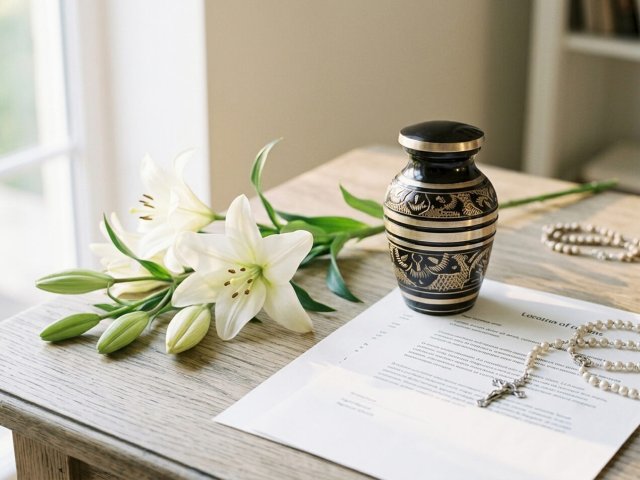
- Rosary: special beads placed in the hands of the deceased;
- National cover: a patterned blanket used to cover the coffin before burial (a traditional element of Latvian Catholic funerals);
- Large church candles and fresh flowers (mainly white or in strict, subdued tones).
Features of the farewell ceremony and memorial traditions
The immediate farewell ceremony at the open coffin is usually brief, lasting about 10 minutes, after which the lid is closed and the service begins. At the cemetery, the priest reads the psalms, and when the coffin is lowered, each mourner places a flower on it rather than throwing soil.
The memorial meal on the day of the funeral is organized in an informal manner and only for the closest family and friends. There is no strict structure or mandatory ritual dishes; on the contrary, it is customary to share warm, and even joyful, life stories and memories of the deceased. Subsequent memorial gatherings are held on any days convenient for the family (usually after one week, one month, and one year).
Attitude towards cremation
The Catholic Church in Latvia gives preference to traditional burial in the ground. However, today cremation is officially permitted. According to Catholic beliefs, there is an important condition: after cremation, the ashes of the deceased should not be kept at home or scattered. The urn must be buried in a cemetery or placed in a specially designed columbarium.
2. Lutheran funerals: restraint and live music
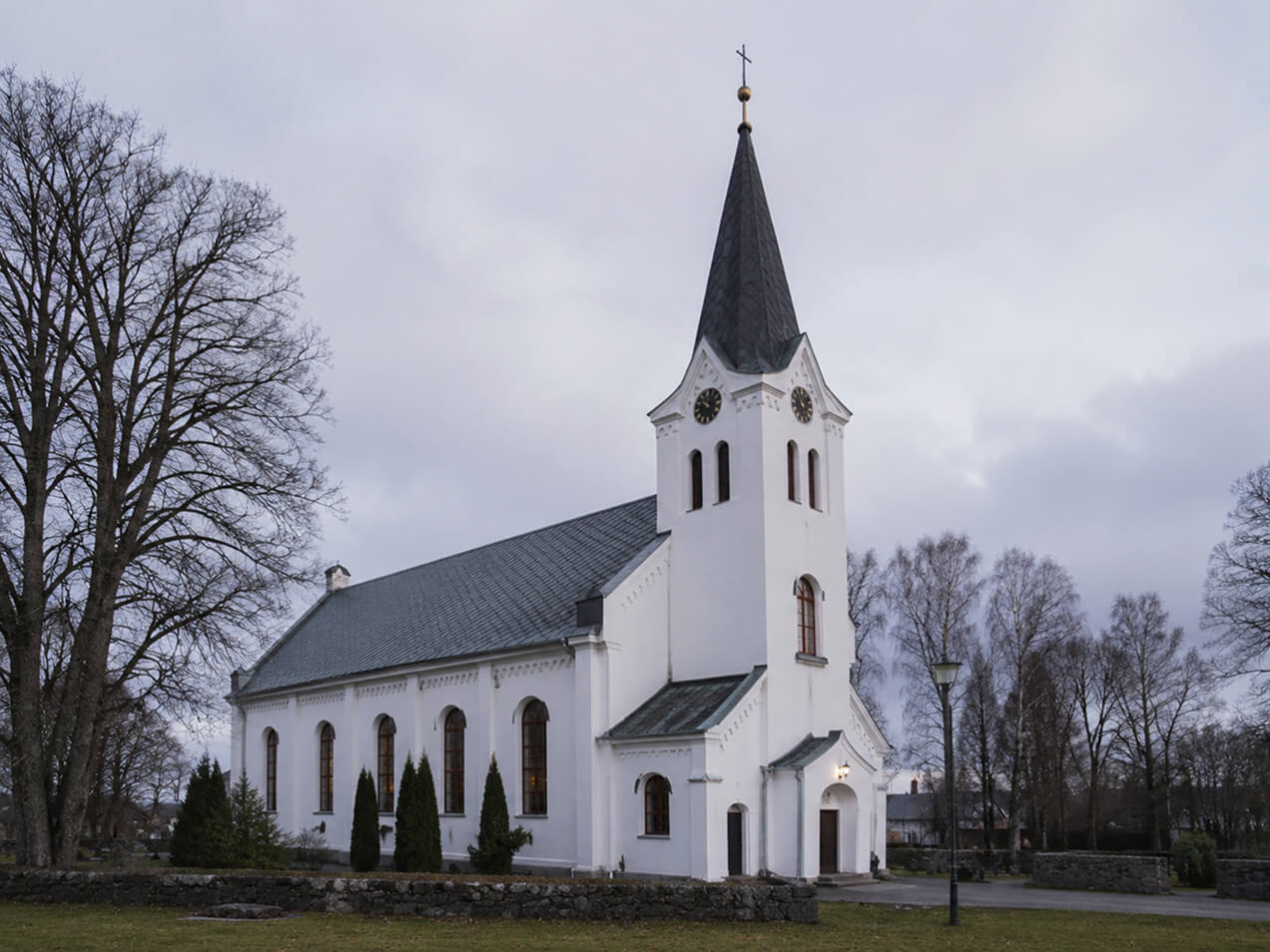
The Evangelical Lutheran Church of Latvia traditionally unites a large part of the population in Vidzeme, Kurzeme, and Zemgale. The Lutheran funeral rite is characterized by solemnity, simplicity, and a focus on biblical texts.
Venue and participants of the ceremony
After death, the preparation of the body, washing, and placement in the coffin are entrusted to professionals from the funeral home, who dress the deceased in dark or modest black-and-white clothing symbolizing the redemption of sins.
The farewell ceremony is most often organized in a Lutheran church, a cemetery chapel, or a modern farewell hall. Less often, at the request of the relatives, the ceremony is held directly at the graveside. The ceremony is led by a Lutheran pastor. The pastor is often assisted during the service by the church organist or an official representative of the local religious community.
Structure of a lutheran service
The foundation of Lutheran funerals is the reading of chapters from the Bible, a personal sermon delivered by the pastor about the life journey of the deceased, as well as communal prayer and requests for the forgiveness of the soul.
Funeral attributes and musical arrangement
The Lutheran rite is characterized by:
- A simple wooden coffin and cross.
- An abundance of fresh flowers, wreaths, and candles.
- Live musical accompaniment: the organ, violin, or wind instruments play an important role in creating the atmosphere.
Choice of burial method
Lutheranism is fully accepting of both forms of burial. The family may choose either traditional burial, with the coffin laid to rest in the ground, or cremation in Riga or other cities, followed by the burial of the urn.
If a traditional burial is chosen, an important feature of the graveside ceremony is that the coffin is lowered into the grave with the head facing west and the feet facing east. The pastor then performs the committal rite, symbolically entrusting the body to the earth three times while reciting a traditional biblical formula.
Memorial traditions
For Lutherans, the memorial meal is organized in a deliberately modest manner, usually in the form of a tea gathering with fresh pastries and without alcohol. The main day of remembrance in the community is the last Sunday of the church year, when churches in Latvia commemorate all parishioners who have passed away during this period with the ringing of bells.
In difficult times, ANGEL is always by your side.
Organizing a funeral is a difficult emotional and physical task. During this challenging time, relatives may struggle to keep track of all church traditions, coordinate with cemeteries and clergy, and complete the necessary paperwork. The funeral bureau ANGEL takes full responsibility for coordinating the entire process.
We will gently help organize a ceremony for any denomination, provide certified funeral transport, prepare the body at the morgue, and select all necessary funeral accessories according to the requirements of your clergy.
3. Orthodox funerals: strict traditions and the funeral service
The Orthodox community of Latvia strictly follows centuries-old funeral traditions of Eastern Christianity. Every stage of the burial process is governed by established rules designed to help the soul pass through the difficult trials of the afterlife.
Place of farewell and religious service
The Orthodox funeral rite requires the farewell ceremony to take place in a church or a cemetery chapel. Farewell halls or crematoriums are used much less frequently, as priority is given to the presence of the body within sacred walls. The funeral service (requiem) is led by an Orthodox priest.
Features and important days of remembrance
Orthodox funerals require strict adherence to the structure of the ritual. During the funeral service, the priest reads the prayer of absolution. In Orthodox tradition, prayers for the soul’s journey after death hold great importance on the key memorial days, which are considered to be the 3rd, 9th, and 40th days after death.
Essential orthodox funeral attributes
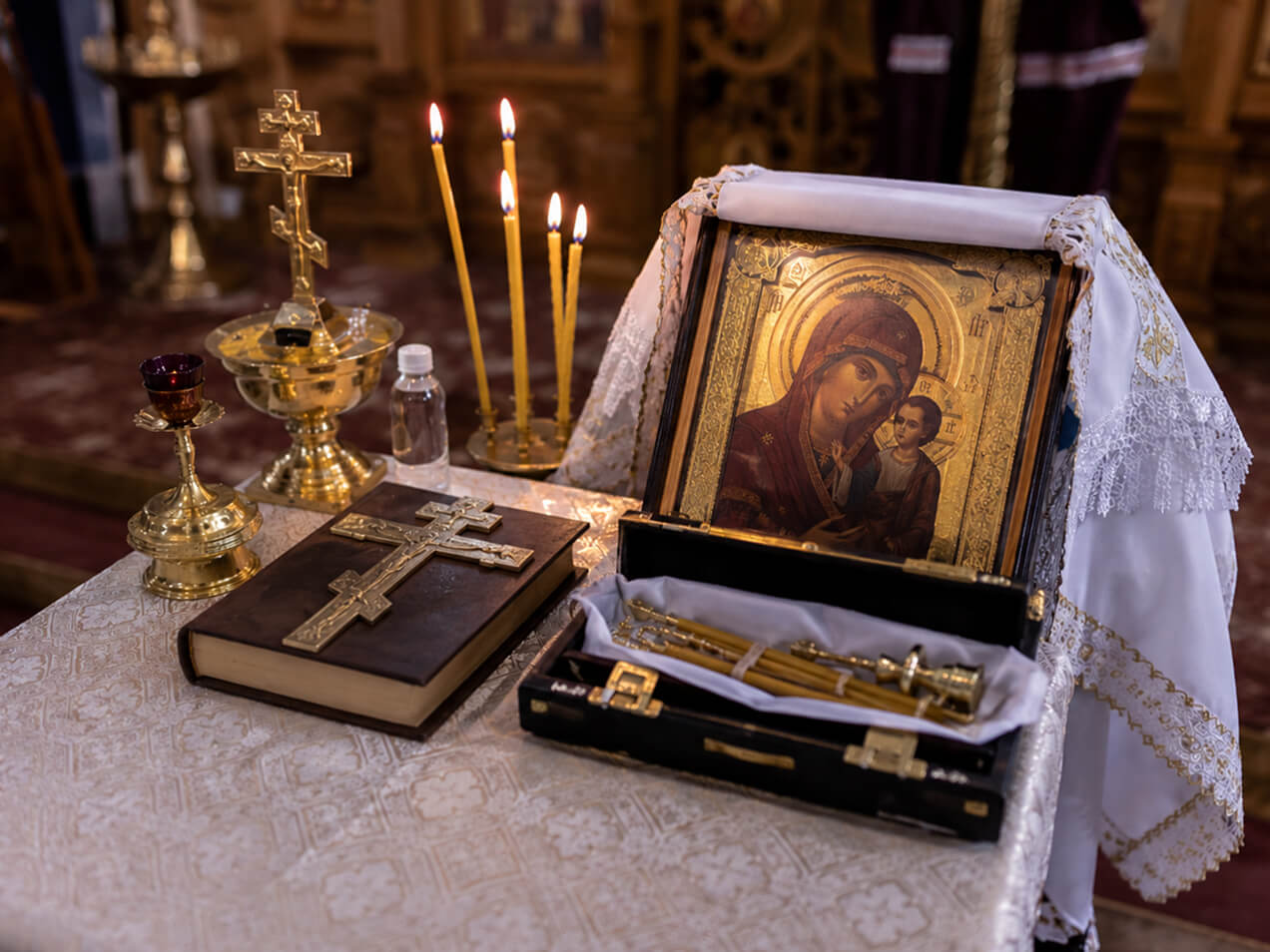
The set of items required for an orthodox burial includes specific elements:
- coffin and an Orthodox wooden grave cross
- body cross placed on the deceased.
- icons held in the hands of the deceased (for men, usually an image of the Savior; for women, an image of the Mother of God)
- thin beeswax church candles placed at the head of the coffin, as well as held by all attendees during the funeral service.
- incense for censing.
- Orthodox funeral set: includes a shroud (a religiously symbolic covering), a forehead wreath, and the text of the prayer of absolution.
- Regarding clothing: for women, a headscarf covering the head is required, as well as a dress or a blouse with a skirt below the knees.
The church’s position on cremation
The Orthodox Church has historically and canonically not supported cremation, considering it contrary to the principle of preserving the integrity of the body before the future resurrection. Traditional burial in the ground is strongly recommended. Cremation is only considered in the most extreme cases when there is no other practical possibility.
Memorial traditions
The Orthodox memorial meal must begin with a communal prayer for the repose of the soul. The meal itself should be deliberately modest and simple, without elaborate dishes. If the memorial days fall during a period of church fasting, all meat and dairy dishes are completely replaced with fasting foods. Silence and restraint are traditionally observed at the table, and alcohol is not encouraged according to strict Orthodox traditions.
4. Old believer funerals: ancient traditions
Old Believers (Ancient Orthodox Christians) make up a significant part of Latvia’s population, especially in Riga, Daugavpils, and Rēzekne. Their funeral traditions are characterized by a high level of conservatism.
Where and how the service takes place
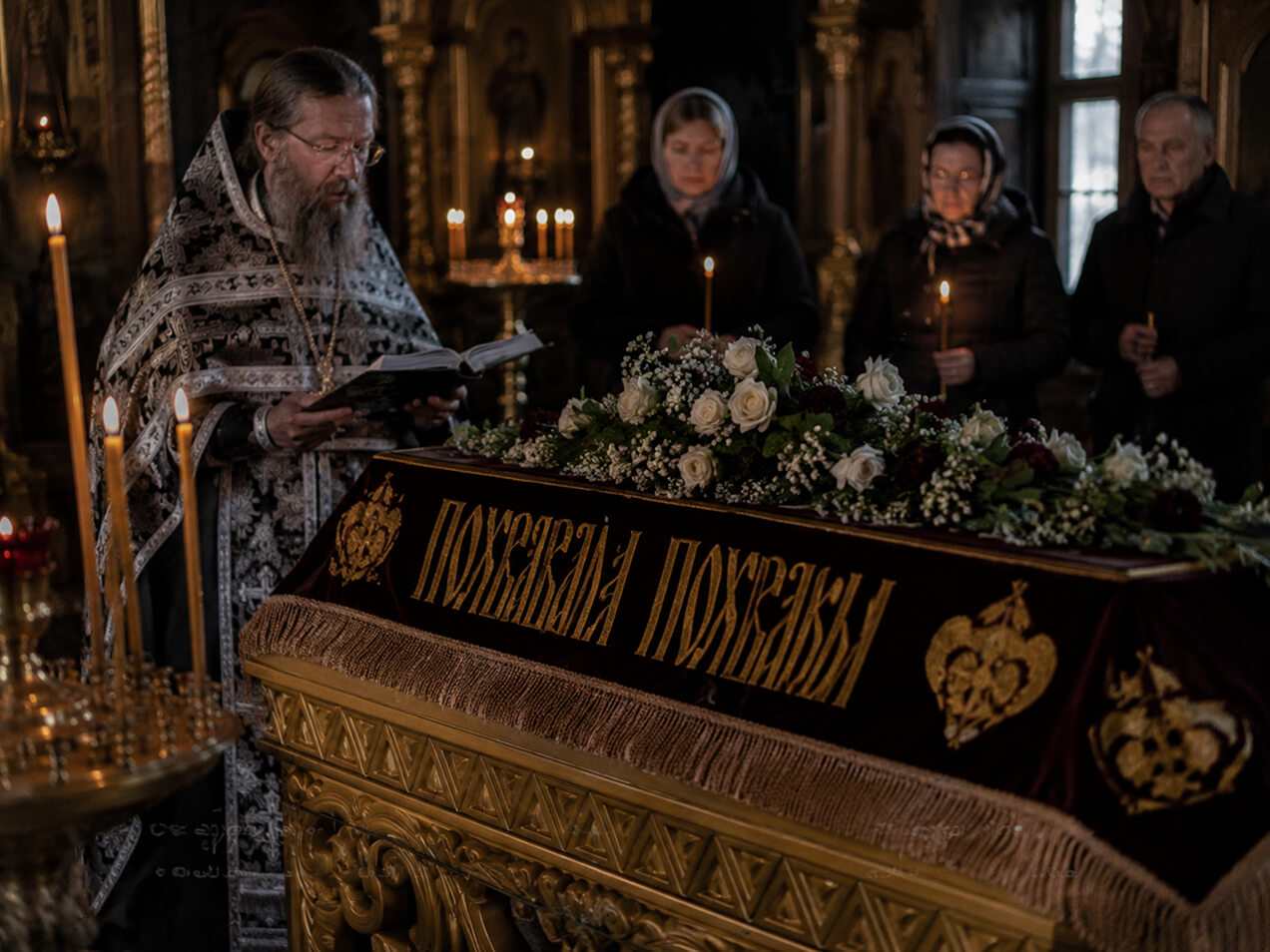
The entire farewell ceremony is strictly organized in an Old Believer prayer house (church). The service is led by an Old Believer spiritual mentor, who in the community is often referred to as the rector.
Features of the canonical tradition
For Old Believers, strict adherence to ancient traditional rituals that have remained unchanged for centuries is of critical importance. Outsiders are rarely permitted to participate in the washing and dressing of the deceased; these preparations are carried out only by members of the community. During the service, special Znamenny chants are performed.
Ritual items
- A simple wooden coffin (often without inner lining made of synthetic fabrics) and an eight-pointed cross.
- Special beeswax candles and ancient icons.
- The use of fresh flowers is permitted, but only in very limited quantities.
- A special funeral set (most often provided by the church): a wooden chest cross, a shroud, burial clothing (a shirt; for women, a traditional sundress), a forehead wreath, and the prayer of absolution (placed in the hands of the deceased, folded into a triangle shape).
Burial method
The Old Believer canon recognizes only traditional burial in the ground. Cremation is under the strictest religious prohibition.
Memorial traditions
The main distinction of the Old Believers’ memorial meal is the categorical and uncompromising prohibition of any alcohol, as well as the avoidance of meat (preference is given to fish dishes, cabbage soup, pea soup, and porridges). During the meal, it is customary to listen to the reading of spiritual books or pray for the repose of the soul.
5. Baptist Funerals: community and focus on the word of God
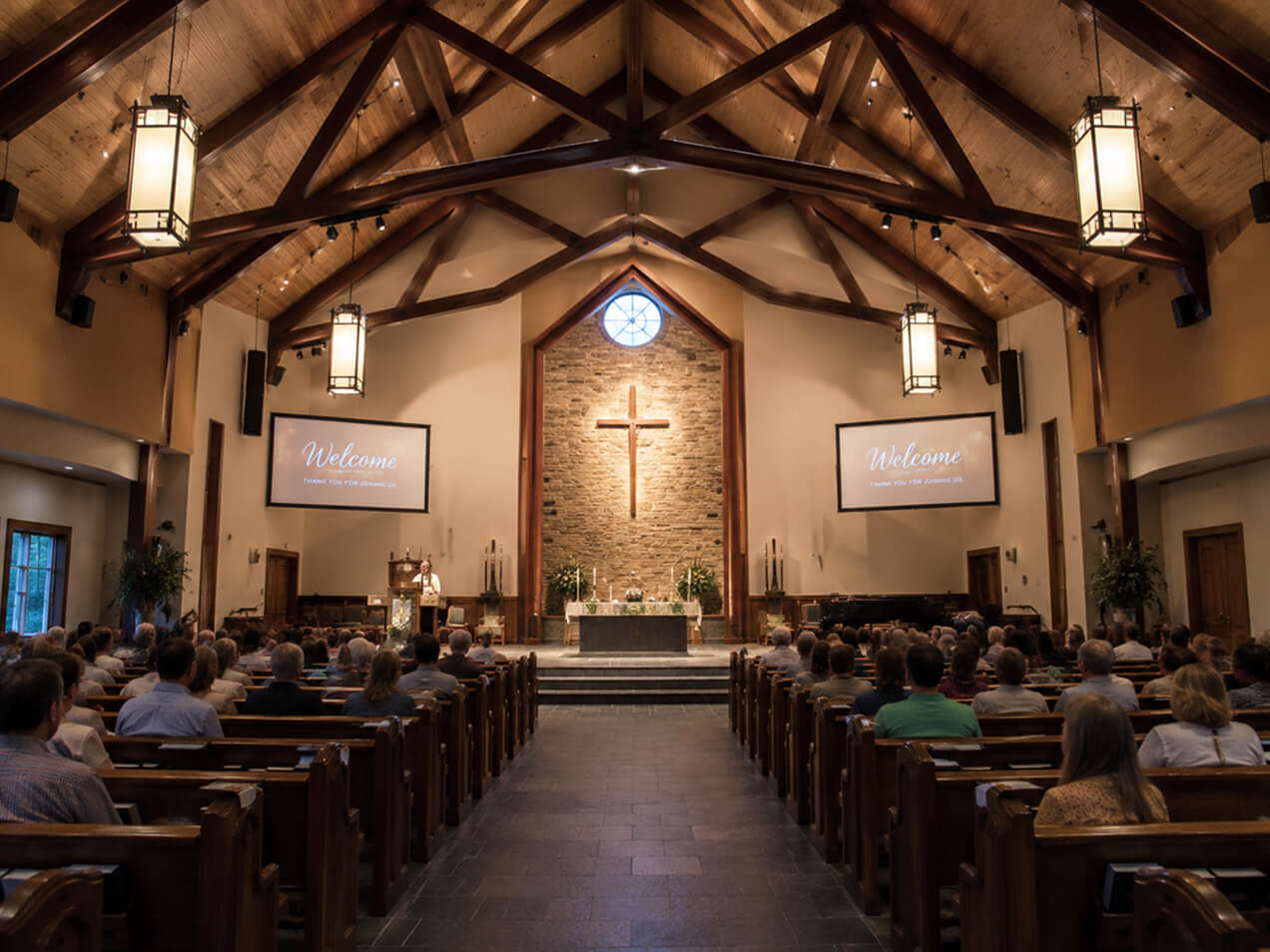
Baptist communities in Latvia conduct funerals in an atmosphere of mutual support, where the focus shifts from strict ritual mysticism to spiritual guidance and support for the living.
Place and leaders of the ceremony
The farewell ceremony is organized in a Baptist prayer house or a cemetery chapel. The ritual at the graveside itself is rarely conducted. The ceremony is led by the community pastor, but the congregation members also take an active part, delivering speeches, spiritual messages, and Bible readings.
Music and rituals
The service is held without elaborate rituals. The central focus is placed on the pastor’s sermon and musical accompaniment. Community members often sing church hymns together or invite musicians for live performances of Christian music.
Attributes and burial traditions
A standard coffin, a wooden cross, and flowers are used. The Baptist Church does not impose strict restrictions on the choice of burial method; both traditional burial in a cemetery and cremation are equally accepted.
Memorial traditions
The Baptist memorial meal takes place in a very simple, warm, and family-oriented atmosphere, completely free from any ritual mysticism.
In the Baptist funeral tradition, there are no mandatory ritual dishes (such as kutia or pancakes), so the menu consists of ordinary homemade food. The meal is often organized as a friendly gathering or tea reception directly in the prayer house or at the family’s home.
The main distinction of a Baptist memorial meal is the complete absence of alcohol and the rejection of prayers for the deceased themselves. Believers consider that the soul of the departed is already with God; therefore, all prayers and speeches are directed toward comforting, spiritually supporting, and strengthening the living. The gathering is accompanied not by mournful silence, but by heartfelt communication: attendees sing Christian hymns with live musical accompaniment, share memories of the good deeds of the deceased, and read inspiring passages from the Bible.
6. Muslim funerals: sharia laws and strict burial traditions
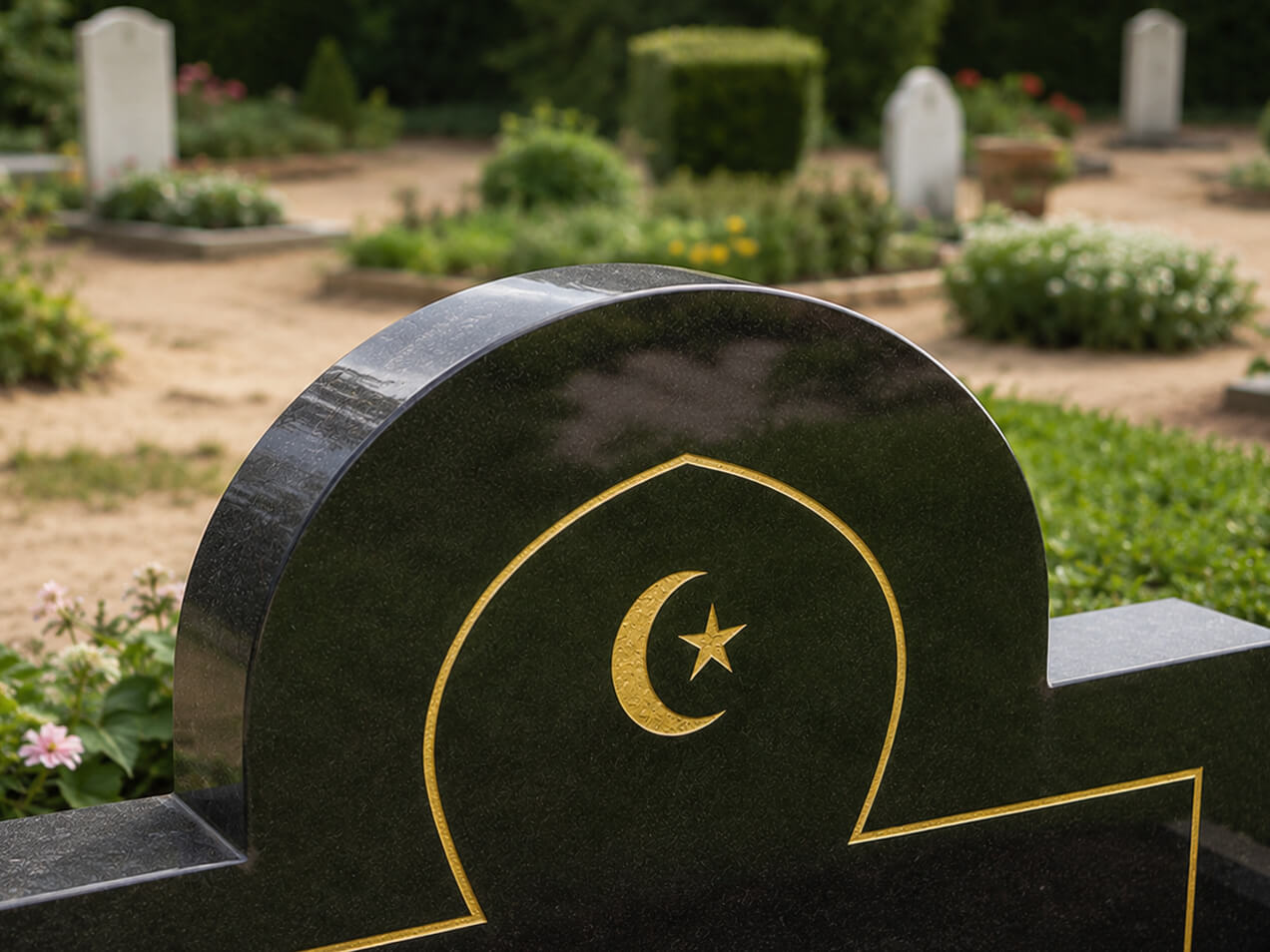
The Muslim community in Latvia strictly follows Islamic laws, according to which the burial process should be organized as quickly as possible after death, ideally within the first 24 hours.
Where the farewell takes place and who leads the process
The funeral ritual is not traditionally held in secular farewell halls. All stages, from the ritual washing of the deceased to the Janazah funeral prayer, take place either in a mosque or on the grounds of a specialized Muslim section of a cemetery. The process is led by an imam or an authoritative spiritual leader of the community, who strictly oversees compliance with the requirements of Sharia law.
Features of body preparation and shrouding
Islam requires special respect and care for the body of the deceased. Embalming and post-mortem makeup are strictly prohibited: a person must return to the Creator in their original state. The ritual washing (Ghusl) is performed only by fellow believers of the same gender as the deceased.
Instead of clothing, a special burial shroud is used: the kafan, consisting of three pieces of white cloth for men and five pieces for women.
The ANGEL funeral bureau assists at all stages of funeral and farewell organization to ensure that the strict time requirements are properly followed.
Ritual items and funeral attributes
Muslim funeral traditions exclude any form of luxury and excess:
- Funerals are conducted without wreaths, artificial or fresh flowers, or candles.
- Musical accompaniment is completely prohibited throughout the entire ceremony.
- Crosses are not placed on Muslim graves; instead, a simple headstone or memorial plaque is installed, facing towards Mecca (Qibla).
Burial method and attitude toward crematio
Cremation in Islam is considered a serious sin and is absolutely prohibited. Burial is carried out exclusively in the ground. According to Islamic traditions, the body is placed in the grave without a coffin (wrapped only in the shroud), positioned on the right side with the face turned toward Mecca. However, in Latvia, taking into account local legislation and sanitary regulations, burial is often permitted in a simple, fully wooden coffin without lining or decorations, which is provided by our funeral bureau.
Memorial traditions
The memorial meal is organized within the family circle on the 1st, 3rd, 7th, and 40th days after death. The gathering is conducted with complete modesty, with the menu consisting mainly of simple meat dishes (strictly halal), shurpa, and pilaf. Any alcohol is completely prohibited. During the meal, loud crying or expressions of grief are not customary; instead, those present recite surahs from the Quran and ask the Almighty for mercy upon the soul of the deceased.
7. Jewish funerals: traditions of the jewish funeral rite
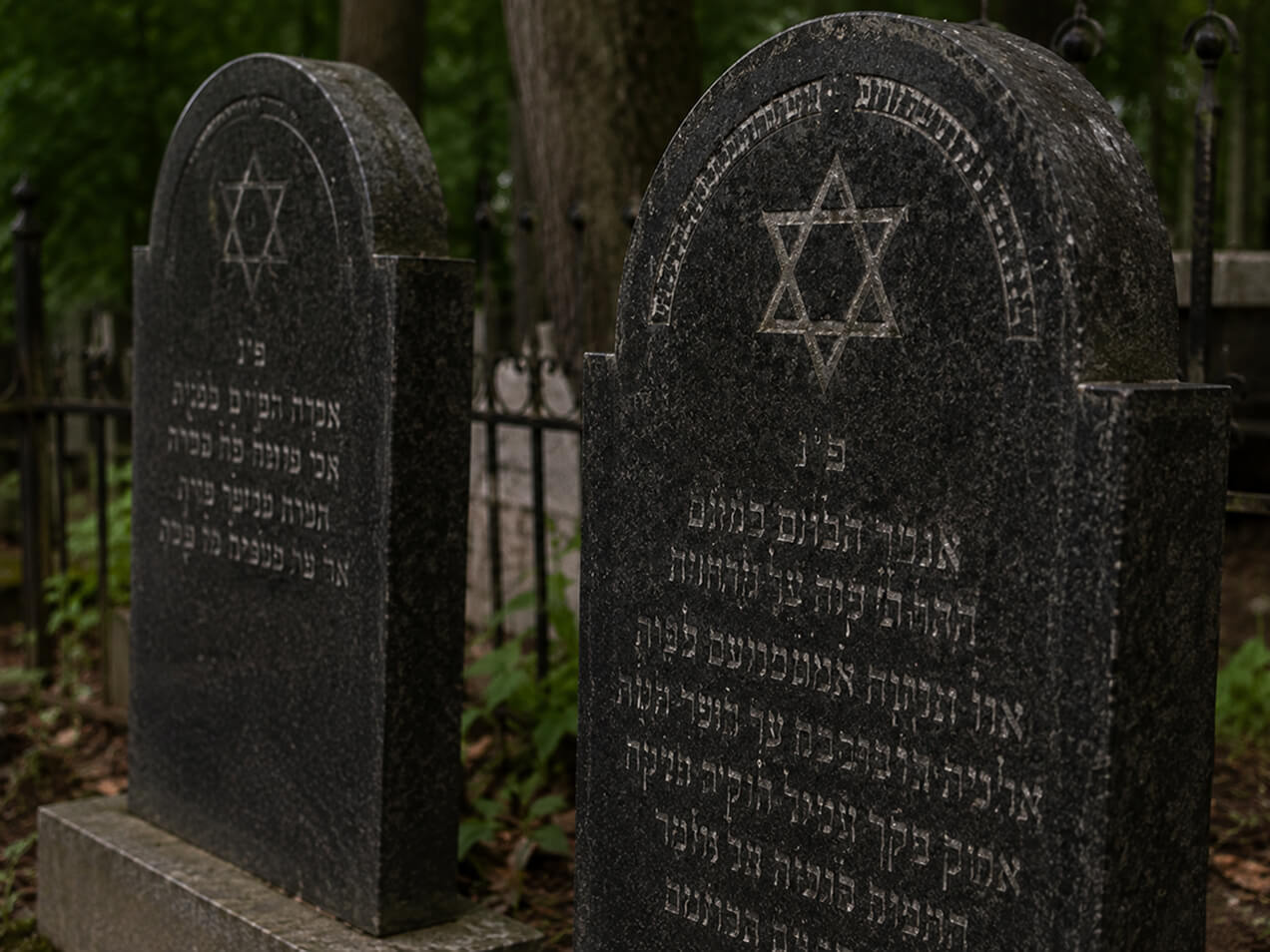
Jewish funerals (Kvura) are based on the laws of the Torah and Halakha. The main principle of the Jewish funeral rite is respect for the dignity of the deceased (Kavod HaMet) and the principle of complete equality of all people before death.
Where and how the service takes place
The farewell ceremony is organized at a Jewish cemetery or in a special facility located there. Funeral services are not traditionally held in synagogues. All stages of preparation are supervised by the Jewish burial society (Chevra Kadisha) with the participation of a rabbi. The funeral is arranged as soon as possible, avoiding delays, except during Shabbat and major religious holidays.
Features of preparing the deceased for burial
The body undergoes thorough ritual purification (Tahara), accompanied by the reading of Psalms. As in Islam, cosmetic procedures or makeup are strictly prohibited. Jewish people are dressed in identical simple white garments made of linen or cotton (tachrichim), emphasizing that before God, the poor and the wealthy are equal. Men are additionally covered with their prayer shawl (tallit), with one of its fringes (tzitzit) removed beforehand, symbolizing release from earthly commandments.
Attributes and farewell rules
Jewish tradition requires maximum simplicity and austerity:
- The coffin must be as simple as possible: made of wood, without a single nail, metal parts, lining, or decorations.
- Flowers, wreaths, and music are completely excluded from Jewish funerals.
- The tradition of saying farewell with an open coffin does not exist; viewing the deceased after the coffin lid has been closed is considered disrespectful.
- Before the burial begins, close relatives perform the ritual of “Kria”: they tear the edge of their clothing as a sign of deep mourning.
Burial method and prohibition of cremation
Judaism recognizes only traditional burial in the ground. Cremation is completely prohibited, as the destruction of the body by fire is considered a direct rejection of the belief in future bodily resurrection. When the coffin is lowered into the grave, relatives and friends personally cover it with earth, using the reverse side of the shovel to demonstrate their reluctance to part with their loved one.
Memorial traditions
Immediately after the burial, the period of “Shiva” begins: a seven-day period of deep mourning during which close relatives remain at home and sit on low stools. The first memorial meal (the meal of consolation) for the mourners is prepared by neighbors or friends. Mandatory elements of the menu are round foods symbolizing the cycle of life, such as boiled eggs or lentils.
Alcohol is not permitted at the table. Throughout the year following the death, close relatives, especially after the loss of a son or parent, recite the memorial prayer Kaddish daily in the synagogue. Instead of flowers, small stones are traditionally placed on the grave as a symbol of eternal remembrance.
Entrust the organization to the professionals at ANGEL
Every detail matters when it comes to a farewell ceremony according to religious traditions.
ANGEL funeral bureau ensures that all funeral customs of your chosen faith are followed with the utmost precision. We help coordinate arrangements with clergy, select the appropriate ritual items, and relieve you of bureaucratic concerns during this difficult time.
We provide services throughout Latvia and are ready to offer assistance 24/7.