Can money be withdrawn from a deceased person’s bank account?

After the death of a loved one, the family is faced with a number of practical matters that need to be handled — planning the funeral or cremation, arranging the farewell ceremony, completing the necessary paperwork, and covering the associated expenses.
Relatives are often aware that the deceased had savings in their bank account, which naturally raises the question: can these funds be used to pay for the funeral? Is it possible to withdraw money from a deceased person’s bank account to cover burial expenses, and how can this be done in accordance with the laws of Latvia?
To avoid misunderstandings or legal risks, it is important to understand how such situations are regulated in Latvia. In this article, we explain what the law provides, what the banking practices are, and how to act properly if you need to cover funeral expenses using the deceased person’s bank account.
What does the law say?
According to Article 382 of the Civil Law of Latvia, everything that belonged to a person at the time of death, including funds held in a bank account, becomes part of the estate.
This means that after a person’s death, their account is no longer considered “freely accessible,” even if relatives have login details or a bank card.
Funds from the account may be used only after:
- a probate case has been opened with a notary,
- the heirs have been identified,
- the certificate of inheritance has been obtained.
Unauthorized withdrawal of funds (for example, using internet banking or a bank card) without legal grounds may be regarded as unlawful disposal of another person’s property and may result in civil liability or even criminal liability.
What happens to a deceased person’s bank account after death?
When a bank receives information about the client’s death (usually from the Population Register), the account is blocked.
This means:
- payments and transfers are suspended,
- cash withdrawals are no longer possible,
- access to internet banking can no longer be used lawfully,
- powers of attorney cease to be valid.
It is important to know: if a power of attorney was issued, it automatically becomes invalid at the moment of the person’s death. Even if a relative previously held a power of attorney to manage the account, it no longer applies after death.
If there was a joint account with a spouse, the situation may vary depending on the terms of the agreement; however, even in such cases, the bank may impose restrictions until the probate process is completed.
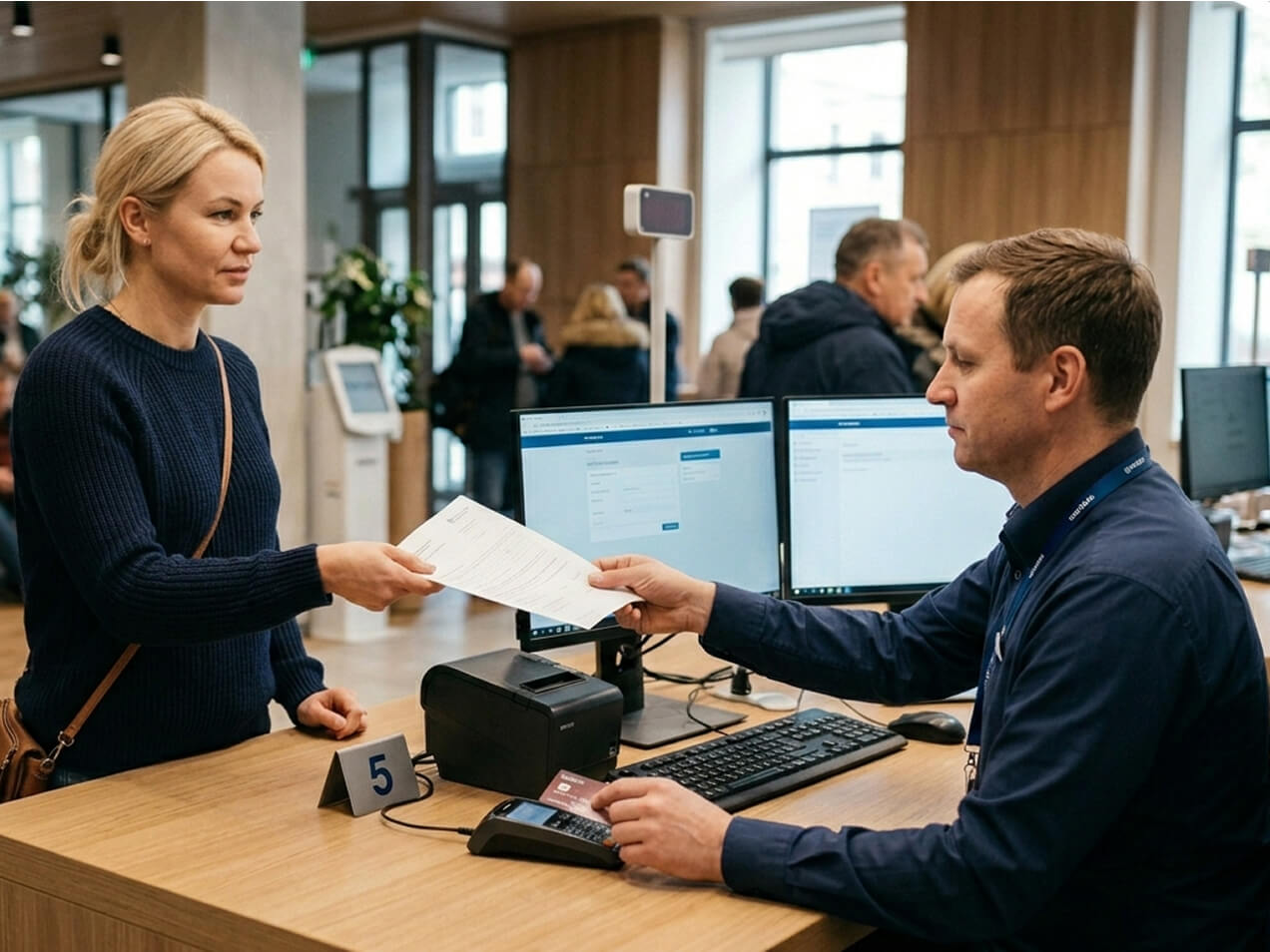
In exceptional cases, the bank may, at the request of the closest relatives (spouse, children, or parents), consider making a one-time payment from the deceased client’s account to cover funeral expenses.
In such a case, the bank must be notified of the person’s death (if the information has not yet been received — a death certificate must be presented), and documents confirming the relationship or marriage must also be provided.
However, it should be noted that such a payment is not automatic — its possibility and amount are determined by the internal rules of the specific financial institution, so the procedure must be clarified by contacting the bank directly.
How to legally gain access to the funds?
To legally use the funds in a deceased person’s account (including for covering funeral expenses), the official procedure must be followed.

1. Initiating a probate case with a notary
An application to open the inheritance must be submitted. The notary determines the heirs and their respective shares.
2. Obtaining a certificate of the right to inheritance
After reviewing the documents, the notary issues a certificate of the right to inheritance — a legal document confirming the entitlement to the inheritance.
3. Requesting payment of funds from the bank
The certificate of inheritance allows one to contact the bank and request the release of funds. If there are multiple heirs, a division agreement may be required.
A probate case usually takes between 3 and 6 months; however, in some cases, the process may take longer.
What happens if a pension is deposited into the account after death?
In practice, it often happens that after a person’s death, their bank account continues to receive pension or government benefit payments. This may occur because the payment was prepared before the death was registered, or the information reached the institutions with a slight delay.
It is important to understand that in such cases, the credited amount cannot always be used legally. If a pension or benefit was paid for a period after death, the relevant institution (for example, the State Social Insurance Agency — VSAA) may require the amount to be returned.
Usually, after the death is registered, the bank blocks the account; however, if funds have already been credited, they may be withdrawn from the account, or the relatives may receive a request to return the overpayment.
Therefore, it is not recommended to use funds credited after the death has been registered until their legal ownership is clarified. In such situations, the safest course of action is to contact the bank or the relevant institution to determine the proper steps.
What to do if there are no funds to cover funeral expenses?
Families do not always have savings or available funds, especially if the death occurred unexpectedly. In such situations, it is important to know that there are legal solutions that can help cover funeral-related expenses without resorting to legally risky actions with the deceased person’s bank card or internet banking.

In such a situation, it is possible:
- contact the municipal social service to clarify available support,
- use the state funeral allowance,
- arrange a staged payment schedule with the funeral home,
- choose a more economical but respectful funeral option.
In many cases, a solution can be found if information and consultation are sought in a timely manner. The most important thing is not to face these questions alone and to seek professional support promptly.
We, the funeral home ANGEL, assist people daily with the processing of state and municipal benefits. If you would like a consultation, we are ready to help around the clock.
About the funeral allowance in Latvia
The funeral allowance is a legal and safe solution that allows covering part or even most of the expenses without resorting to legally risky actions, such as unauthorized use of the deceased person’s bank account or bank card. Therefore, before taking any action with the funds in the account, it is important to clarify what support can be obtained.

The funeral allowance can be received by a relative who has taken responsibility for organizing the funeral.
The allowance is paid to:
- the State Social Insurance Agency (VSAA), if the deceased was a recipient of a pension or benefit,
- the employer (in certain cases),
- the municipality (if the person was not socially insured).
The amount of the allowance depends on the status of the deceased. To receive it, the following are required:
- death certificate,
- application,
- identity document.
For more details on possible allowances, read our article: “Funeral allowance: who is entitled to it and how to apply?”
Frequently asked questions
Can I use the deceased person’s internet banking if I know the passwords?
No. Such actions are not legal after death.
Can I withdraw a small amount to pay for the funeral?
Without legal grounds — no.
What happens if there are no heirs?
The inheritance passes to the state.
Do heirs have to pay the deceased’s debts?
Heirs are responsible for obligations only up to the value of the inheritance, if they accept it.
ANGEL support in difficult situations
Questions about withdrawing money from a deceased person’s bank account often arise when practical tasks must be handled alongside financial decisions. However, Latvian law is clear — a deceased person’s bank account becomes part of the inheritance estate, and the funds in it can only be used following the established legal procedure.
Therefore, it is important not to rush into unauthorized actions and to choose a safe and legal path — clarify your rights, initiate a probate case, or use state and municipal support to cover funeral expenses.
If you need assistance with organizing a funeral, preparing documents, or consulting on how to properly handle a deceased person’s bank account, contact the funeral home ANGEL.
We provide consultations 24/7 and help resolve all matters professionally.